
Industry
Why Forward Deployed Engineers Deliver What Standard Implementation Can't

The premise behind most enterprise software implementation is that the software is fixed and the customer adapts. Implementation teams arrive, map the customer's data to the platform's schema, configure the parameters the software exposes, train the end users, and hand it off. This works tolerably when the problem being solved is well-defined and widely shared across customers.
It works poorly for capital programs.
Capital programs don't run on standardized workflows. An owner delivering a hyperscale data center campus and an owner delivering a semiconductor fabrication facility share almost no reporting cadences, decision-making structures, risk thresholds, or data architectures. A GC managing a life sciences fit-out operates under different contractual norms, approval workflows, and regulatory obligations than one managing a ground-up industrial facility. The project data that matters — what to monitor, how to surface it, what to alert on, and to whom — is different for every program.
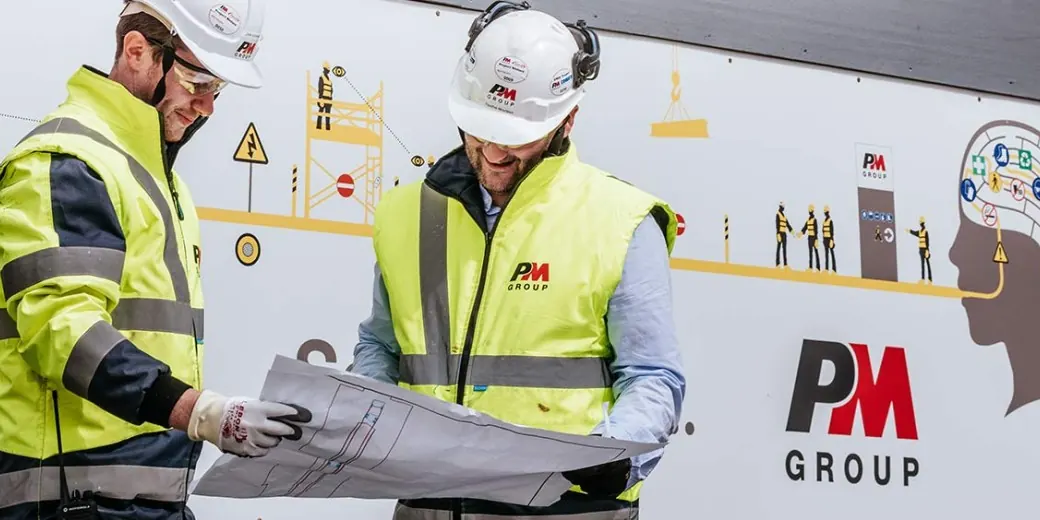
Forward deployed engineers are Weaver's answer to that problem. Rather than handing customers a platform and a training manual, Weaver embeds engineers directly into the program. They're not there to walk teams through features. They're there to learn how the program actually works — and configure Weaver around it.
Learning the program before touching the platform
A Weaver forward deployed engineer starts by understanding the customer's operational reality. That means mapping the organizational chart: who owns which decisions, where accountability sits, which relationships between owner and GC are collaborative and which are transactional. It means reading the contract to understand what reporting the owner is entitled to and what the GC is obligated to provide. It means learning the existing data systems — which project management platform is the system of record, how cost data flows from the field to finance, where schedule data lives and how often it's updated.
From that foundation, the engineer configures Weaver to match. The monitoring framework gets mapped to the metrics that matter for this program — not a generic set of KPIs. The reporting cadence gets aligned to the owner's actual decision-making rhythm. Alerts get calibrated to the thresholds that are meaningful given this program's risk profile and contractual structure. Dashboards get built around the outputs the right stakeholders need to see — not a default view that every customer receives.
The result is a platform that reflects how the customer actually works, not how the vendor imagined a typical customer might work.
Aligning to business processes and decision cadences
The way capital programs make decisions is more varied than it appears from the outside. An owner's internal approval chain for a change order above a certain dollar threshold may route through four departments. A GC's project controls team may produce a separate schedule analysis every two weeks that needs to feed into owner-side reporting. The risk register may need to surface differently for a project sponsor than for an on-site owner's representative.
A forward deployed engineer understands these workflows before configuring anything. The monitoring output from Weaver gets structured around the actual decision cadence of the program — not an ideal one, but the real one. That means the right people get the right signals at the right time, in a format that maps to how they already work. When the output doesn't fit the workflow, it gets ignored. When it does, it gets used.
Policy and regulatory requirements
For programs in regulated sectors — life sciences facilities, semiconductor fabs, federally funded infrastructure — customization is not optional. An FDA-regulated construction program carries documentation standards and traceability requirements that don't exist in commercial real estate. Export control obligations for a semiconductor facility affect who can access certain categories of design data and how that data can be stored and transmitted. Owner organizations in these sectors are themselves subject to stringent compliance requirements: SOX, HIPAA, industry-specific frameworks. When they bring a third-party platform into their program, they need it to meet the same standards they're held to.
A forward deployed engineer who understands these requirements can configure the platform to respect them — structuring data flows to satisfy compliance obligations, setting access controls that reflect the customer's policy requirements, and producing reporting outputs that meet regulatory standards without requiring manual transformation downstream. This level of configuration requires both domain knowledge and enough time embedded in the program to understand how the requirements apply in practice, not just how they're described in a policy document.
Data and system architecture integration
Owners who have invested in a data infrastructure — a specific data lake, a BI tooling stack, a defined API architecture, an ERP system that needs to stay authoritative for cost data — need a monitoring platform that connects to that infrastructure, not one that requires them to build a parallel data environment alongside it.
Forward deployed engineers work with the customer's existing architecture from the start. They map where Weaver's data inputs need to come from and where its outputs need to go. They work with the customer's technical teams to integrate Weaver into the data flows that already exist, so project intelligence surfaces in the tools the customer is already using — dashboards they've already built, reports they already distribute, workflows they already run. The goal is to extend what the customer has, not replace it.
Why the programs Weaver serves require this model
The capital programs Weaver serves — multi-billion-dollar data centers, semiconductor fabs, life sciences manufacturing facilities — can't afford platforms that almost fit. When a monitoring framework is calibrated to the wrong KPIs, or reports in a cadence that doesn't match how the owner makes decisions, or surfaces signals through a workflow that bypasses the people who need to act, the cost of that misalignment is measured in missed risks and delayed responses.
Forward deployed engineers are how Weaver ensures that doesn't happen. The platform is built to monitor capital program health at scale. The forward deployment model is built to make sure that monitoring is calibrated to the specific program, the specific team, and the specific decisions that need to be made.
For complex programs, that's not a premium option. It's the baseline for the monitoring to do its job.